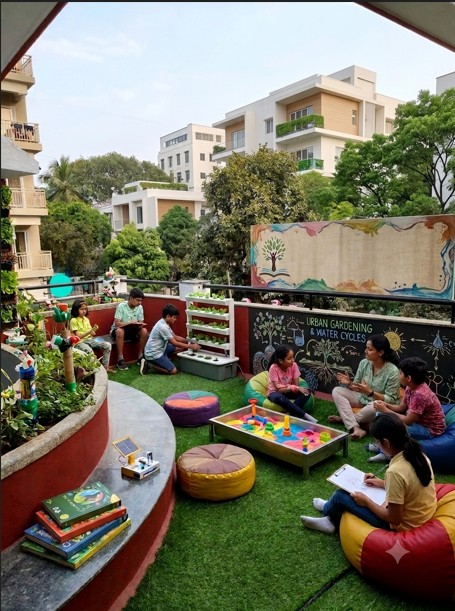
What Makes a School Truly Inclusive? A Parent's Checklist (2026)
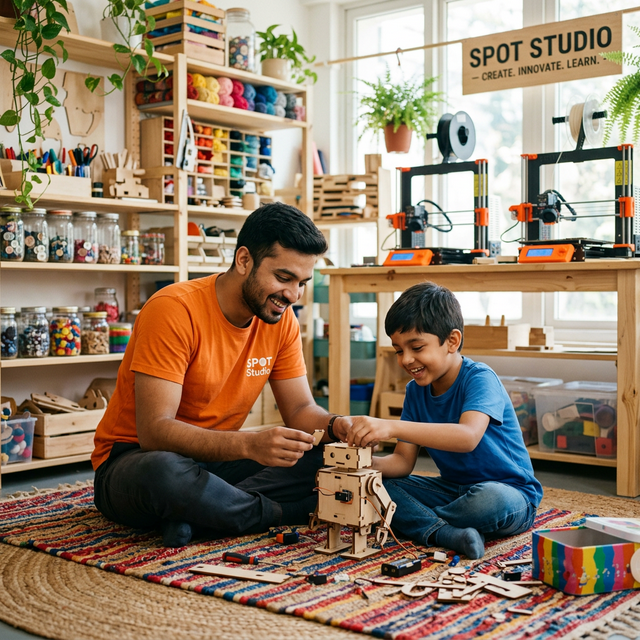
Most schools say they are inclusive. Few are. A practical 12-point checklist for Indian parents of neurodivergent, gifted and 2e children — with the exact questions to ask on a school tour.
What Makes a School Truly Inclusive? A Parent's Checklist
Short answer: A school is inclusive when a child's support does not depend on the child performing normalcy. If the accommodations disappear the moment the child stops being convenient, that is not inclusion — that is tolerance with conditions.
Almost every school brochure in India now carries the word inclusive. Very few of them mean the same thing by it. Some mean "we admit children with disabilities." Some mean "we allow a shadow teacher if you pay for one." Some mean "we have a counsellor who visits on Thursdays."
None of those are inclusion. They are entry permissions.
This post is the checklist we wish someone had given us before the first school tour.
First, the definition problem
There are roughly four things schools mean when they say inclusive:
| What they say | What it usually means | Is it inclusion? |
|---|---|---|
| "We are an inclusive school" | We admit neurodivergent children | No — that is admission |
| "We have a resource room" | Children are pulled out for remediation | Partly — depends on whether it is punitive |
| "We allow shadow support" | Parents fund and manage a shadow teacher | No — that is outsourcing |
| "We adapt for the learner" | Curriculum, assessment and environment flex | Yes |
The fourth one is rare because it is expensive, slow, and it forces adults to change. The first three are cheap because they place the burden of adaptation on the child.
The 12-point checklist
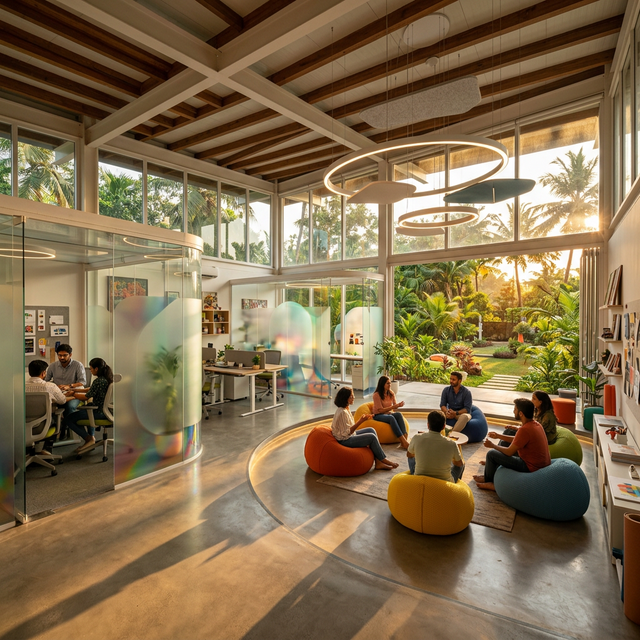
Take this to your next school visit. Ask directly. Watch how quickly they answer — hesitation is data.
1. Who changes when a child struggles? Ask: "A child is falling behind in Grade 7 maths. Walk me through what happens." If every step in the answer is something the child must do differently — more practice, more tuition, more discipline — the system has no adaptation in it.
2. Is support universal or conditional on diagnosis? Good schools give a child what they need without demanding a psychologist's report as a ticket. Ask whether accommodations require formal assessment.
3. What is the actual assessment flexibility? Can a child demonstrate understanding through a build, a recording, an oral defence? Or is it written exams with extra time as the only concession?
4. Who owns the child's learning plan? Ask to see a blank IEP or learning plan template. If none exists, plans are informal, which means they vanish when a teacher leaves.
5. What is the review cycle? A plan reviewed once a year is a document. Reviewed monthly, it is a system.
6. Ratio, honestly stated. Not "small classes." Ask for the number. Ask for adult-to-child ratio, not teacher-to-child — they are different numbers.
7. What happens on a dysregulated day? Ask: "My child has a meltdown at 11 am. What does the school do?" Listen for whether the answer contains a room, a person, a plan — or a phone call to you.
8. Is the sensory environment designed or accidental? Bells, tube lights, echoing halls, and assembly lines are all design decisions. Ask what has been deliberately changed.
9. How is behaviour understood? Ask what the school does with a child who refuses to participate. Consequence-first language ("we have a strict policy") tells you behaviour is read as defiance, not communication.
10. What is the exit pathway? NIOS? IGCSE? State board? Ask what percentage of learners complete a board exam and how the school supports children who take a non-standard route.
11. What do teachers get? Ask how many hours of neurodiversity training staff receive per year and who delivers it. "We are all trained" without a number means no.
12. Can you speak to two current parents of your choosing? Not the two the school picks. If the answer is no, that is your answer.
The language test
You can learn a great deal in ten minutes just by listening to how staff talk about children.
Signals of a genuinely affirming school:
- "He needs more processing time" (describes support)
- "She works best standing" (describes the learner)
- "That strategy did not work for him, we changed it" (the system was wrong, not the child)
Signals to walk away from:
- "He is very bright but lazy" (a sentence that has ended more childhoods than any diagnosis)
- "She just needs to try harder"
- "We will see if he can cope"
- "He is high-functioning so he does not need support"
The word cope is the tell. Inclusion is not about whether the child can survive the environment. It is about whether the environment was built for a range of children in the first place.
Inclusion is not the same as being nice
This is the part parents are rarely told.
A warm school with kind teachers and no systems will fail your child slowly and apologetically. A structured school with clear plans, documented goals and a review rhythm will hold your child even on the weeks when a particular teacher is having a bad month.
Kindness is a personality. Inclusion is an architecture.
Ask for the architecture.
What this looks like at SPOT
SPOT Microschool in Bengaluru was built for learners aged 10–17 who did not fit conventional systems — neurodivergent learners, gifted learners, twice-exceptional learners, and children who had simply been made small by school.
Some of what that means in practice:
- Small cohort (around 20 learners) so adaptation is possible, not aspirational
- Individual learning plans with goals reviewed on a fixed cycle, not annually
- IGCSE and NIOS pathways so the exit route bends to the learner
- Strengths-based documentation — we write down what a child can do, in observable terms, before we write anything else
- Staff trained in neurodiversity-affirming practice, not just awareness
We are not the right school for every child. No school is. But we will tell you honestly, in the first conversation, whether we think we are.
Frequently asked questions
What is the difference between an inclusive school and a special school? A special school educates children with disabilities separately. An inclusive school educates all children together and changes its own practices so that becomes possible. Both can be appropriate depending on the child; they are not ranked, they are different designs.
Is inclusive education mandatory in India? The Rights of Persons with Disabilities Act, 2016 and the National Education Policy 2020 both direct schools towards inclusive education. Implementation varies enormously between schools and states, so parents should verify practice rather than rely on policy.
Do I need a formal diagnosis to get support at school? Legally, formal accommodations in board exams generally require documentation. Day-to-day classroom support should not require it — and a school that insists on a diagnosis before offering basic flexibility is telling you something about its philosophy.
What is a neurodiversity-affirming school? One that treats autism, ADHD, dyslexia and related profiles as differences in how a brain works rather than deficits to be corrected. In practice it means support is offered without requiring the child to appear neurotypical.
How do I know if my child needs an alternative school? Watch for the pattern rather than the incident: chronic school refusal, a bright child with collapsing marks, escalating anxiety on Sunday nights, or a child who has stopped talking about anything they enjoy. Any one of those is worth a conversation.
SPOT is a microschool in Whitefield, Bangalore for teens aged 10–17.
Admissions are open for 2026–27.
Enquire about a place →