What If Your Child Doesn't Need a Better School - Just a Different One?
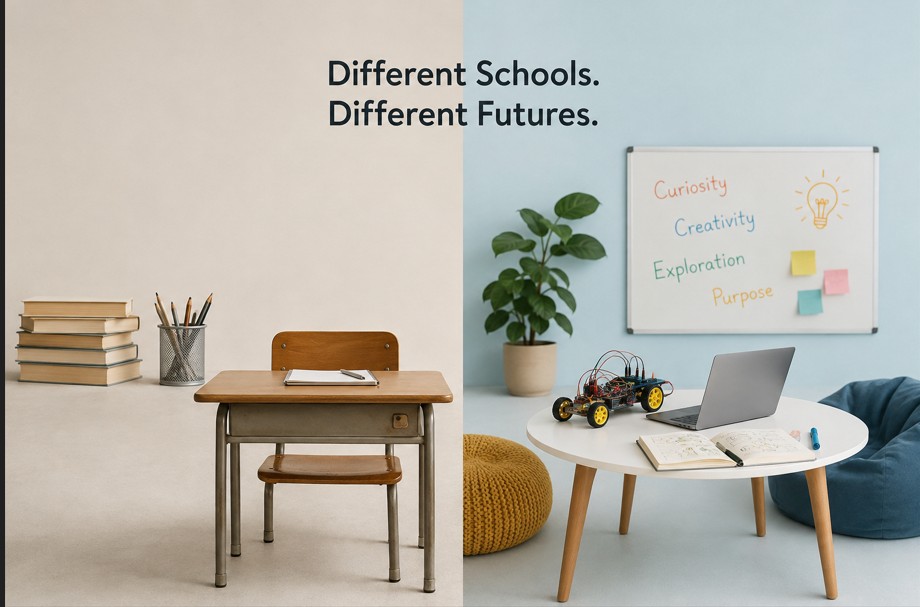
What if your child doesn't need a better school, but a different learning environment? Explore alternative schools, personalised learning, 2e education and more.
Your child is capable. You know it. Their teachers know it. But somehow, school still doesn't seem to bring out their best.
Maybe they understand lessons quickly but lose interest when the class moves at the same pace for everyone. Maybe they have endless questions, but little room to explore them. Maybe they love building, creating and experimenting, yet struggle with repetitive assignments. Or perhaps they do well academically but come home exhausted from constantly trying to fit into a system that doesn't quite fit them.
And then comes the question many parents eventually ask:
“Do we need to find a better school—or do we need to look for a different kind of school?”
The answer may lie in understanding something we don't often question: what schools actually expect from children.
The Unspoken Rules of School
Walk into almost any traditional classroom and you'll notice a familiar rhythm. Children are expected to listen when the teacher is speaking, complete assignments within a given timeframe, move from one subject to another according to a fixed timetable, keep pace with their classmates and prepare for assessments along the way.
There is nothing inherently wrong with this structure. Traditional schools provide children with consistency, academic foundations, routines and opportunities to learn alongside their peers. For many children, this environment works very well.
But consistency also comes with expectations.
Children are generally expected to learn within a particular timeframe, follow a common curriculum, complete work in a particular way and demonstrate their understanding through assignments, tests and examinations.
For many learners, that's perfectly appropriate.
But what happens when the child doesn't fit comfortably into the system?
What If Your Child Learns Faster—or Needs More Time?
Imagine a child who understands a new concept within minutes, while the class spends the next 30 minutes practising it. The child finishes early, waits for the others and eventually starts looking out the window, talking to a friend or finding something else to do.
From the outside, it may look like a lack of attention.
But what if the real problem is that the child isn't being challenged enough?
Now imagine another child who needs more time to process the same concept. Before they've fully understood it, the class has already moved on to something new. They fall further behind, become frustrated and may eventually stop participating.
The same classroom structure has created two completely different experiences.
One child may be under-challenged. Another may be overwhelmed.
Neither child is necessarily incapable. They simply need something different from their learning environment.
When "Try Harder" Isn't the Answer
When a child struggles in school, the first instinct is often to look for solutions outside the classroom.
More tuition. More practice. More worksheets. A stricter timetable. Extra homework. More revision.
Sometimes, these things help.
But sometimes, adding more of the same thing doesn't address the real issue.
Because the question may not be:
“How can we make this child fit the system?”
It may be:
“Could the learning environment fit the child better?”
That is an important distinction.
A child can be capable of learning something and still struggle to demonstrate that ability in a particular environment.
Every Child Doesn't Learn the Same Way
Every child learns differently. Some understand concepts best by listening or seeing them explained, while others need to build, experiment, question or move around before an idea truly clicks. Some children can spend hours deeply exploring a subject that interests them, while others need more structure, guidance and support to stay engaged. And many children need a combination of both independence and structure.
The important thing is not to find one method that works for every child, but to create an environment that allows different children to learn in ways that work for them.
This becomes particularly important for gifted children and 2e (twice-exceptional) kids.
A gifted learner may need greater depth and challenge rather than simply more work. A 2e learner may be highly capable in one area while needing significant support in another. A child can therefore be both highly capable and genuinely struggling at the same time.
That's something a standard classroom can sometimes find difficult to accommodate.
So, What Is an Alternative School?
This is where the idea of an alternative school becomes interesting.
Alternative education isn't simply about doing away with textbooks, exams or structure. It is about asking whether there are better ways to organise learning around the needs of individual children.
Can students learn at different paces? Can their interests influence what they learn? Can academic concepts be connected to real-world problems? Can children demonstrate understanding by creating, experimenting and solving—not only by writing answers?
In many alternative schools, the answer is yes.
The idea isn't that every child needs alternative education. It's that some children thrive when education is designed differently.
Personalised Learning: More Than "Learning at Your Own Pace"
The phrase personalised learning gets used often, but it doesn't mean that every student simply gets to do whatever they want. It also doesn't mean lowering academic expectations.
Personalised learning means understanding where a learner is starting from, what they already know, what interests them, where they need support and what kind of challenge will help them grow.
For one child, a concept may become clear through a textbook or explanation. For another, it may click when they build something or connect it to a real-world problem. The learning goal can remain the same, while the route to getting there looks different.
Personalisation isn't about expecting less from children. It's about creating the conditions in which they can do more.
What Happens When Children Can Apply What They Learn?
Think about the difference between learning about something and actually using it.
A student can learn mathematical formulas, but what happens when they use mathematics to design something? They can read about ecosystems, but what happens when they investigate one? They can learn the principles of electricity, but what happens when they use those principles to build a working circuit?
This is where project-based learning can become powerful.
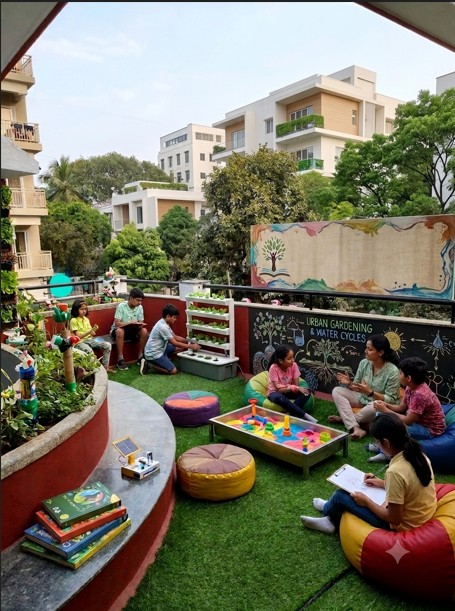
Instead of experiencing every subject as a separate block on a timetable, students can use knowledge from different areas to work towards something meaningful. A single project might involve mathematics, science, research, writing, technology, design and communication.
More importantly, students have a reason to learn.
Instead of asking only, “Will this be on the test?”, they can start asking:
“What can I do with this?”
That shift can change the way children experience learning.
Alternative Doesn't Mean Less Academic
One of the biggest misconceptions parents have when they first hear about alternative education is that "alternative" means less academic.
It doesn't have to.
A strong alternative school can have clear learning goals, academic expectations and recognised curriculum pathways while giving children more flexibility in how they learn.
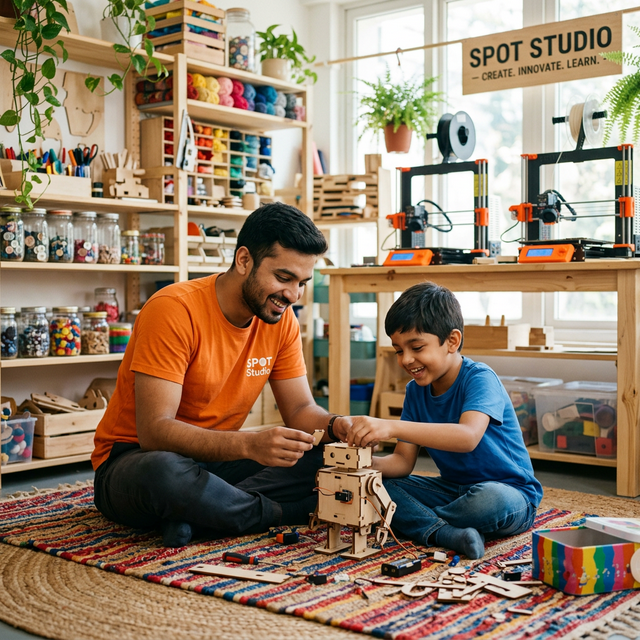
At SPOT Microschool, students can work towards NIOS and IGCSE curriculum pathways while experiencing a learning environment that also emphasises projects, innovation, technology, creativity and real-world application.
The difference isn't necessarily what children learn.
It can be how they experience learning.
What About the Future?
There is another reason parents are beginning to question whether the traditional model of education is enough.
The world children are growing up in is changing rapidly. AI is changing how people work, technology is reshaping entire industries, and information is available at a level previous generations could never have imagined.
The ability to simply remember information is no longer enough.
Children will increasingly need to know how to think critically, solve unfamiliar problems, communicate ideas, collaborate with others, adapt to change, learn independently and use technology meaningfully.
These abilities aren't developed through memorisation alone.
They grow when children have opportunities to question, experiment, create, make mistakes, rethink and try again.
That is why an education focused only on completing a syllabus can sometimes miss an important part of learning: preparing children to use what they know.
What Should Parents Look For?
If you're considering an alternative school, don't choose one simply because the word "alternative" sounds appealing.
Start by asking what the school actually means by it.
Does the school genuinely personalise learning, or is it simply a smaller version of the same classroom model? How much individual attention will your child receive? Can students explore their interests while still working towards clear academic goals? How much of their learning involves projects, experimentation and real-world application?
It's also important to understand the academic pathway. Ask about the curriculum, assessments, recognised qualifications and what options students have for higher education later.
If your child is gifted or 2e, ask specifically how the school supports learners who may be advanced in some areas and need additional support in others.
And don't overlook the role of parents. Good parent support and communication matter, particularly when a child's learning needs are different from what a conventional classroom typically expects.
The Goal Isn't to Find a "Better" School
It's easy to get caught up in rankings, facilities, results and reputation.
And those things matter.
But there is another question worth asking:
What happens to my child inside this environment?
Do they become more curious? More confident? More independent? More willing to ask questions? More comfortable making mistakes? More excited about learning?
Because ultimately, the best school isn't necessarily the one that looks best on paper.
It is the one where your child can grow into who they are capable of becoming.
Maybe Your Child Doesn't Need a Better School
Some children thrive in traditional schools. Some need additional support within that system. And some discover their potential when they move into a more flexible and personalised environment.
There is no single answer that works for every child.
That's precisely why parents should feel comfortable exploring different possibilities.
For families looking for an alternative school in Whitefield, SPOT Microschool offers a different approach to education for gifted and 2e learners.
With personalised learning, project-based learning, hands-on experiences, innovation, technology and recognised NIOS and IGCSE curriculum pathways, SPOT brings academic learning together with curiosity, creativity and real-world application.
Because the question isn't always:
“Which is the better school?”
Sometimes, the more important question is:
“Which school is better for my child?”
And sometimes, the answer isn't a better version of what they've already experienced.
Sometimes, they simply need a different one.
SPOT is a microschool in Whitefield, Bangalore for teens aged 10–17.
Admissions are open for 2026–27.
Enquire about a place →