Alternative Schools in Whitefield: How SPOT Microschool Rethinks Learning
Looking for an alternative school in Whitefield? Explore how SPOT Microschool uses personalised, project-based and experiential learning to help children learn differently.
For many parents in Whitefield, choosing a school today is about more than academics. They are looking for an environment where children can explore their interests, develop independence, build practical skills and learn at a pace that works for them.
This is one reason alternative education is gaining attention in Bangalore.
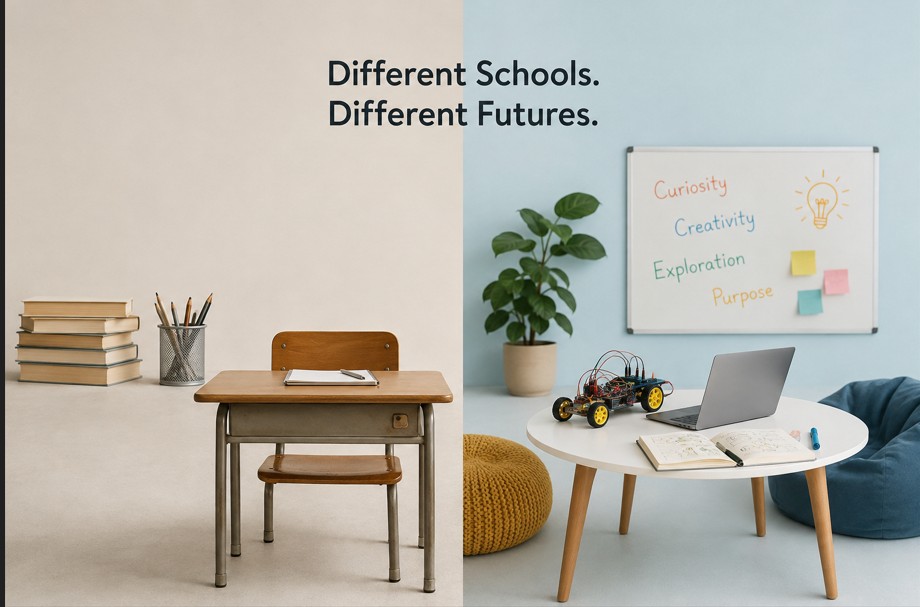
Unlike traditional schooling, where students often move through the same curriculum at the same pace, alternative schools can offer more flexibility in how children learn, what they explore and how they demonstrate their understanding.
At SPOT Microschool in Whitefield, learning is designed around the individual student. Through personalised learning, project-based education, community visits and hands-on experiences, SPOT aims to connect what happens inside the classroom with the world outside it.
What Is an Alternative School?
An alternative school takes a different approach to conventional education. While every alternative school has its own philosophy, many focus on creating learning environments that are more flexible, experiential and student-centred.
Instead of learning only through textbooks, lectures and examinations, students may learn through:
- Projects and real-world problem solving
- Hands-on experiments and making
- Individual interests and areas of strength
- Collaborative learning
- Community experiences and field visits
- Creative and practical activities
- Independent exploration
This doesn't mean academics are ignored. Rather, academic concepts can be introduced and applied through experiences that make learning more meaningful.
Why Are Parents Exploring Alternative Schools in Whitefield?
Children don't all learn in the same way.
Some children love asking questions and exploring a topic far beyond what is covered in class. Others understand concepts better when they can build, experiment or see how something works in the real world.
Some students may be highly interested in technology, art, science or entrepreneurship, while others need more flexibility and independence in their learning environment.
A smaller, more personalised learning environment can give educators the opportunity to understand these differences and respond to them.
This is particularly relevant for students who may not thrive in a conventional classroom but are capable of deep learning when given the right environment.
Project-Based Learning at SPOT
One of the key ways learning happens at SPOT is through project-based learning.
Instead of treating subjects as completely separate areas, projects can bring multiple concepts together around a real question, challenge or idea.
For example, a student working on a technology project may explore elements of mathematics, science, design, communication and problem-solving at the same time.
The focus isn't simply on completing a project. Students are encouraged to understand the process behind it — asking questions, researching, experimenting, making mistakes, finding solutions and presenting what they have learned.
This allows students to move from:
"I learnt this concept."
to:
"I know how to use this concept."
That distinction is an important part of experiential education.
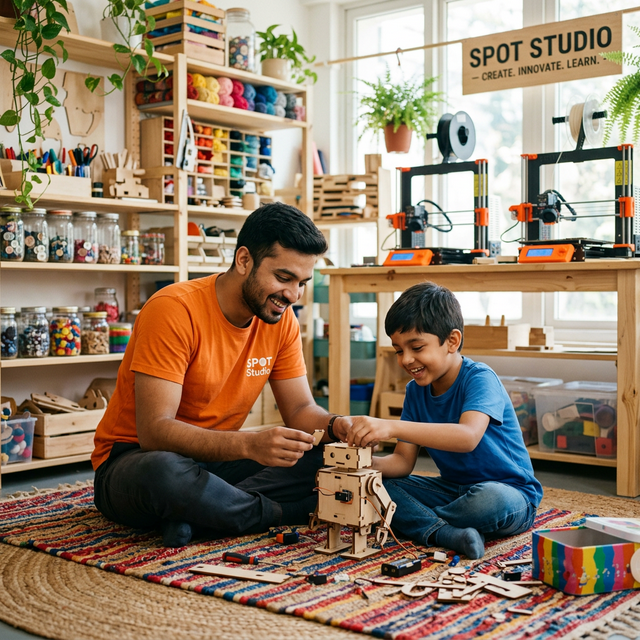
At SPOT, students can explore areas such as robotics, coding, AI, 3D printing, art, music, theatre, baking and making. These experiences give students opportunities to discover interests that may not always emerge through a traditional classroom curriculum.
Personalised Learning: Learning That Starts With the Student
Personalised learning doesn't simply mean giving every child a different worksheet.
It starts with understanding the learner.
At SPOT, the learning environment is designed to give students space to explore their strengths, interests and areas for growth. A smaller teacher-student ratio allows educators to spend more time understanding individual students and supporting their learning journey.
A student who is deeply interested in coding, for example, may be encouraged to take that interest further rather than being limited to the boundaries of a standard lesson.
Similarly, a student who learns best through hands-on experiences can have opportunities to experiment, build and create.
The aim is to create a learning environment where students aren't constantly asking:
"What do I need to finish?"
but increasingly ask:
"What do I want to understand?"
Learning Doesn't Stop at the School Campus
One of the important aspects of alternative education is recognising that the world itself can become a classroom.
At SPOT, community visits and real-world experiences form part of the learning journey.
A visit outside the school isn't treated simply as a recreational outing. It can become an opportunity for students to observe, question, interact and connect classroom concepts with their surroundings.
A visit to a garden, museum, business, community space or other real-world environment can lead to conversations around science, history, sustainability, design, economics, people and society.
Students get opportunities to see that learning isn't restricted to a textbook or a classroom board.
It happens when they observe something, ask a question and try to understand why it works the way it does.
From Learning to Doing
Another important part of the SPOT approach is giving students opportunities to make and create.
The Maker Space and Innovation Lab provide environments where students can experiment with ideas and turn them into something tangible.
They may work with technology, robotics, coding, electronics, 3D printing or other tools while developing skills such as:
- Problem-solving
- Creativity
- Collaboration
- Communication
- Critical thinking
- Planning
- Perseverance
- Independent decision-making
These are skills that extend beyond academic performance.
A student doesn't just learn about a concept — they get an opportunity to use it, test it and improve it.
Exploring Interests Beyond Traditional Subjects
Alternative education can also create space for students to explore interests that may not fit neatly into conventional subjects.
At SPOT, students have opportunities to engage with areas such as art, dance, music, theatre and baking, alongside technology and innovation.
These experiences can help students discover interests and strengths that may otherwise remain unexplored.
For some students, a creative activity may become a form of expression. For others, it may develop confidence, collaboration or communication skills.
The objective is not to turn every interest into a career. It is to give students the opportunity to discover what they enjoy and what they are capable of.
Building Independence Through Learning
A personalised learning environment also creates opportunities for students to gradually take greater ownership of their education.
Instead of always waiting for instructions, students can be encouraged to ask questions, make decisions, manage projects and reflect on their work.
Over time, this can help develop a sense of independence.
This is particularly important for adolescents. Education isn't only about preparing students for the next examination or grade. It is also about preparing them to navigate a world where they will need to make decisions, solve unfamiliar problems and continue learning independently.
Is an Alternative School Right for Your Child?
Alternative education isn't necessarily the right choice for every student. The most important consideration is fit.
Parents exploring alternative schools in Whitefield can ask:
- Does my child enjoy learning through exploration?
- Does my child need more individual attention?
- Does my child have strong interests that they want to explore deeply?
- Does my child learn better by doing?
- Would a smaller learning environment suit them?
- Does the school balance personalised learning with a structured academic pathway?
- Are there opportunities for real-world experiences and practical learning?
Visiting the school and speaking with educators can help parents understand whether the environment is right for their child.
A Different Way to Think About School
Alternative education isn't about removing structure or academics.
It is about asking whether there are better ways to help a particular child learn.
At SPOT Microschool, the approach brings together personalised learning, project-based education, hands-on making, community experiences and academic learning within a smaller learning environment.
The goal is to create a space where students can be academically engaged while also having the freedom to explore their interests, develop practical skills and understand themselves as learners.
Because sometimes, the most meaningful learning doesn't happen when a child is told exactly what to learn.
It happens when they are given the space, support and opportunity to find out what they can do.
Looking for an Alternative School in Whitefield?
If you're exploring alternative schools in Whitefield for your child, visit SPOT Microschool to understand how its personalised and project-based approach works in practice.
Talk to the team, explore the learning spaces and see how students learn through projects, hands-on experiences and the community around them.
SPOT is a microschool in Whitefield, Bangalore for teens aged 10–17.
Admissions are open for 2026–27.
Enquire about a place →