Best Alternative Schools in Bangalore (2026): An Honest Parent's Guide
A grounded guide to alternative schools in Bangalore — The Valley School, CFL, Shibumi, Prakriya, Poorna, Aurinko, Bangalore Steiner, SPOT Microschool and more. Philosophies, who each suits, and the questions to ask.
Best Alternative Schools in Bangalore (2026)
Short answer: Bangalore has the densest alternative schooling ecosystem in India. The best-known options are The Valley School, Centre For Learning (CFL), Shibumi, Prakriya Green Wisdom School, Poorna Learning Centre, Bangalore Steiner School, Aurinko Academy, The Atelier School and Sparkling Mindz — plus a newer layer of microschools including SPOT Microschool for teens. They differ far more by philosophy than by quality, so the useful question is not which is best but which is built for my child.
Disclosure: SPOT Microschool is ours. It is listed in the microschool section and labelled.
Why Bangalore has so many
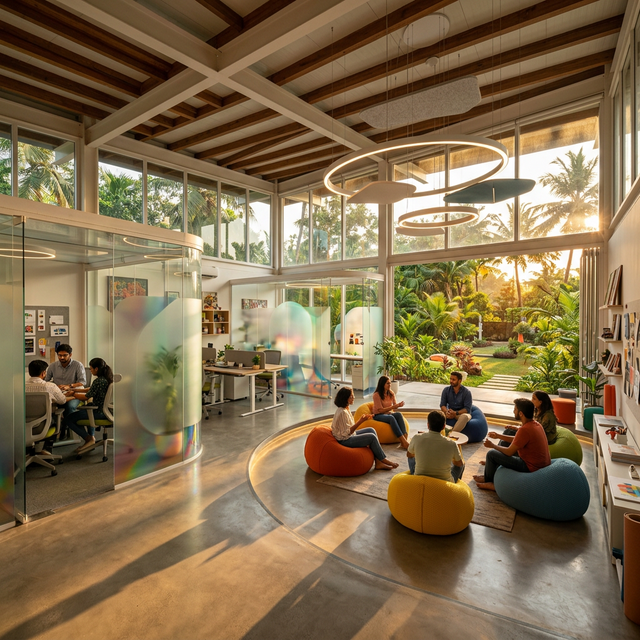
Three reasons stacked on top of each other: a long Krishnamurti Foundation presence, a large migrant professional population willing to question default schooling, and land on the city's southern and eastern edges that made nature campuses possible. The philosophies you will encounter most often are Montessori, Jiddu Krishnamurti, Steiner/Waldorf and Reggio Emilia, though several schools have built their own home-grown methods.
The Krishnamurti lineage
The Valley School
Run by the Krishnamurti Foundation India on a large campus off Kanakapura Road. The focus is holistic education, encouraging students to explore their interests and passions, with a well-known outbound programme. Large by alternative-school standards, and often the first name parents encounter.
Suits: Families who want space, nature and a strong philosophical spine, and whose child can handle a bigger community.
Centre For Learning (CFL)
Small, deliberate, intensely dialogue-driven. Consistently named alongside The Valley School as one of the city's foundational unconventional schools.
Suits: Reflective children and parents who genuinely want to engage with the school's philosophy rather than treat it as a service.
Shibumi
Started in 2008 and run by teachers and students from J. Krishnamurti schools, Shibumi's uniqueness is its non-formal approach to learning. The admission process is unlike other schools: parents attend roughly 12–15 dialogue sessions where their intent towards the school is explored in depth, and are encouraged to speak to existing Shibumi parents. Seats are limited and screening is stringent. It emphasises hands-on, experiential, peer-based and multisensory learning, and runs a post-school apprenticeship programme for young people between 17 and 19.
Suits: Families prepared to be changed by the school, not just to enrol in it.
The ecological and progressive schools
Prakriya Green Wisdom School
Located in Sarjapur, with a wide canopied campus. Children address teachers as "aunties" rather than ma'am, and the school holds to a philosophy of teaching a child when they are ready. Its Active Learning Methodology is hands-on: the school grows its own vegetables, students cook, and the campus supports over 200 tree species and 75 butterfly species. It follows the ICSE syllabus, delivered creatively, and varies its teaching methods to reach different kinds of learners.
Suits: Families who want ecological grounding with a recognised board.
Poorna Learning Centre
A small alternative school in Sahakar Nagar that began as an effort to homeschool the founder's children. Around 140 children, 32 teachers including special education teachers, and four support staff. Teacher-student relations are relaxed and students use teachers' first names. Established in 1993, affiliated to Cambridge and also following NIOS.
Suits: Families in north Bangalore wanting genuine inclusion with in-house special education capacity. Poorna is one of the few older alternative schools with special educators actually on staff.
Bangalore Steiner School
Emphasises holistic development, integrating academic learning with artistic and practical activities — the standard Waldorf structure of head, heart and hands, with a delayed formal-academics start.
Suits: Younger children, and parents comfortable with a slower academic ramp.
The flexible-pathway and senior options
Aurinko Academy
Known for a career-focused junior college. It offers grades 9 to 12 with ten specialised streams including pure sciences, design, architecture, fine arts, law, hospitality, mass communication, psychology, education, engineering and medicine, with strong emphasis on career guidance, mentorship and skill development.
Suits: Teenagers who already know roughly what they want and need a route there that is not standard PCM/PCB.
The Atelier School
A non-traditional methodology fostering creativity and individualised learning paths.
Suits: Arts-inclined and design-inclined learners.
Sparkling Mindz
Integrates game-based approaches into education.
Suits: Primary-age children; strong on thinking skills and confidence-building.
The microschool layer (newer, smaller, more specific)
Microschools are the fastest-growing category in Bangalore and the least documented. They typically run 10–30 learners, operate as learning centres, and register learners for NIOS or Cambridge/Edexcel as private candidates.
SPOT Microschool (ours)
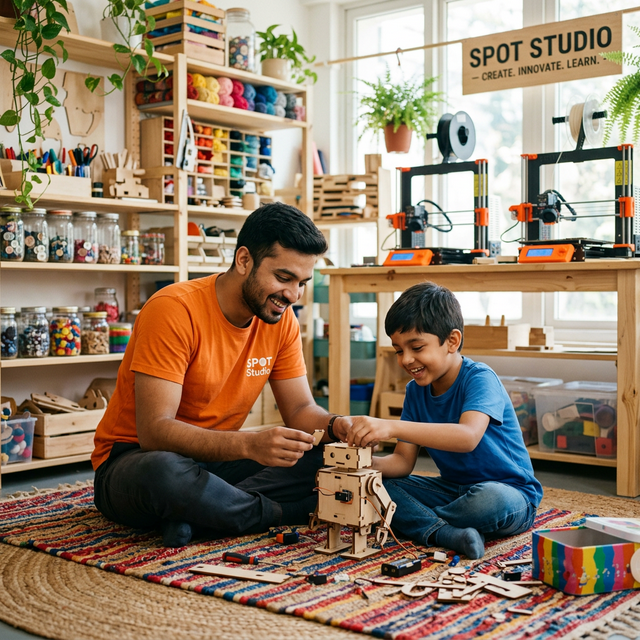
SPOT is a neurodiversity-affirming microschool in Bengaluru for learners aged 10–17, with IGCSE and NIOS pathways and a cohort of around 20 learners.
It was not built to be a gentler version of a mainstream school. It was built for a specific child: the one who is clearly bright, has been told for years that they are not applying themselves, and has slowly stopped believing they are capable of anything.
What that means structurally:
- Individual learning plans with goals written as observable indicators, reviewed on a fixed cycle rather than annually
- Strategy response tracking — every support tried with a learner is recorded as helpful, partly helpful, rejected, or needs adaptation, so the next teacher starts where the last one finished
- Executive function support designed into the day rather than referred out
- Mixed-age grouping, because interest and readiness are better grouping criteria than birth year
- Strengths-first documentation in plain, non-pathologising language
SPOT sits inside a wider ecosystem — it grew out of Insighte Childcare's clinical work with neurodivergent children, which means the educators and the clinicians are in the same conversation rather than emailing each other reports.
Suits: Bright, struggling 10–17 year olds; autistic and ADHD teenagers; twice-exceptional learners; school refusers; children coming out of homeschooling who need peers.
Does not suit: Families wanting a large campus, competitive sport, or a big year group. We will tell you this in the first meeting rather than the third term.
Also worth exploring in this category: BeMe, Ohana, Pramiti, Kingdom of Children, La Wisdom, The Buddhi Schools, Papagoya, and Creative School — each with a distinct philosophy and a small footprint.
Comparison at a glance
| School | Area | Philosophy | Ages | Board / pathway | Scale |
|---|---|---|---|---|---|
| The Valley School | Kanakapura Rd | Krishnamurti | K–12 | ICSE | Large |
| Centre For Learning | Off Bangalore | Krishnamurti | K–12 | Cambridge / NIOS | Small |
| Shibumi | Bangalore | Krishnamurti, non-formal | K–12 + PG | Non-formal + boards | Small |
| Prakriya | Sarjapur | Ecological, Active Learning | K–12 | ICSE | Medium |
| Poorna | Sahakar Nagar | Inclusive, home-grown | K–12 | Cambridge, NIOS | ~140 |
| Bangalore Steiner | Bangalore | Waldorf | Early–middle | Waldorf + boards | Small |
| Aurinko Academy | Bangalore | Career-focused progressive | 9–12 | Multiple streams | Medium |
| Sparkling Mindz | Bangalore | Game-based thinking | Primary | — | Small |
| SPOT Microschool | Bengaluru | Neurodiversity-affirming | 10–17 | IGCSE, NIOS | ~20 |
Details change. Verify directly with each school before applying.
How to actually choose
1. Start with the child, not the philosophy. Waldorf is beautiful and wrong for some children. Krishnamurti dialogue is transformative and unbearable for others. Write down three things your child needs before you read a single brochure.
2. Understand the admissions culture. Some of these schools are choosing you as much as you are choosing them. Shibumi's 12–15 dialogue sessions are not a hurdle, they are the school telling you what kind of relationship it expects. If that feels like too much, it is useful information.
3. Ask the exit question early. "What board does my child sit, and who supports the registration?" Alternative schools have very different answers — ICSE, Cambridge, NIOS as a private candidate, or a non-formal route with boards taken externally. This determines a lot at age 16.
4. Visit on an ordinary day. Open days are performances. Ask to visit on a Tuesday in the middle of a term.
5. Talk to a parent who left. Every school has them. The school will not introduce you. Alternative schooling parent groups in Bangalore will.
Frequently asked questions
Which is the best alternative school in Bangalore? There is no single best. The Valley School, CFL and Shibumi are the most established Krishnamurti-lineage schools; Prakriya and Poorna are the best known progressive and inclusive options; Aurinko serves senior students with non-standard career paths; SPOT Microschool serves neurodivergent and 2e teenagers in a small cohort. Fit beats ranking every time.
Are alternative schools in Bangalore recognised? Most are affiliated to ICSE, Cambridge or NIOS, or prepare learners to appear through NIOS as private candidates. The recognition comes from the board, not from the school's philosophy. Always confirm the specific pathway.
Are alternative schools good for children with ADHD or autism? Sometimes, and not automatically. Less rigidity helps; but a school without special educators, individual plans and a documented review cycle may simply be unstructured rather than supportive. Ask specifically about staff training and learning plans. Poorna and SPOT are among the Bangalore options with explicit neurodivergence capacity.
What is a microschool? A small learning community, typically 10–30 learners, run by educators rather than parents, with learners registered for board exams through NIOS or as Cambridge/Edexcel private candidates. It sits between homeschooling and a conventional school.
Are alternative schools expensive in Bangalore? The range is wide — from modest neighbourhood setups to premium nature campuses. Small-cohort schools cost more per child because the adult-to-child ratio is the product. Several offer need-based support; ask directly.
Can we move from homeschooling to an alternative school mid-year? Most alternative schools and all microschools admit mid-year, since they are not bound to a rigid syllabus calendar. The transition question that matters more is social, not academic.
SPOT Microschool is a small cohort focused strengths base microschool in Bengaluru for learners aged 10–17, offering IGCSE Pearson Edexcel and NIOS pathways. Book a conversation.
SPOT is a microschool in Whitefield, Bangalore for teens aged 10–17.
Admissions are open for 2026–27.
Enquire about a place →