He wasn't bored of learning. He was bored of school.
A Bengaluru parent's account of a gifted son who found school under-stimulating, tried homeschooling, missed community — and what changed at SPOT Microschool.
"He wasn't bored of learning. He was bored of school."
Aarav's name has been changed. His parents gave permission for this story to be told.
For a long time we thought the problem was attention.
That is what the reports said, in different words each year. Not focused in class. Disturbs others. Capable but does not apply himself. Every parent-teacher meeting had the same shape — a teacher being kind about it, and us nodding, and the drive home in silence.
Then one evening he explained the entire water cycle to us, unprompted, including things we did not know, and we understood we had been given the wrong problem to solve.
He was not struggling to pay attention. He was paying attention to everything except the twenty-eighth explanation of something he had understood in the first four minutes.
The disturbing-the-class years
Here is the thing nobody tells you about a bright, under-stimulated child in a full classroom.
He has forty minutes. He finishes the work in eight. What is he supposed to do with the other thirty-two?
He talks. He makes the boy next to him laugh. He asks a question that is technically about the lesson but is really about the ceiling fan. And from the front of the room, all of that looks exactly like a discipline problem — because from the front of the room, it is a discipline problem.
So he became the boy who disturbs the class. Once you become that boy, you stay him. The label arrives before you do, every September.
Then it stopped being disturbance and started being something quieter and worse. He stopped wanting to go. Sunday evenings got heavy. Mornings became a negotiation. He was not defiant about it. He just did not see the point, and he was too honest to pretend he did.
That is the part that frightened us most. Not the complaints from school. The flatness.
He asked us to homeschool him
He asked. That is worth saying, because we did not decide it for him.
And homeschooling worked, in the way it works. The pressure came off almost immediately. He read enormously. He went down rabbit holes for weeks at a time. The morning fight disappeared and our house got quieter in a good way.
But something was missing, and it took us months to name it.
He had no one to be surprised by.
Nobody to argue with about something neither of them knew. Nobody who would say that's not going to work and be right. Nobody to build something with badly and then build it again. We could give him information. We could not give him peers.
An adult can teach a child a great deal. An adult cannot be a rival, a collaborator, or an audience of equals. We were his parents and his teachers and by then also his only classmates, and no household can carry all three of those.
He came to SPOT to bake
That is the whole reason. There was a baking studio. He wanted to make something.
We were not enrolling him. We were not evaluating a school. We had, honestly, stopped evaluating schools. We signed him up for a short studio because he was interested and we were tired.
And then he did not want to leave.
Not dramatically. He just kept talking about it. He wanted to go back. He asked when the next thing was.
What actually happened after that
He learned to code. Properly — not a summer camp version of it, the kind where he was still working on it at eleven at night because a thing was broken and he wanted it not to be.
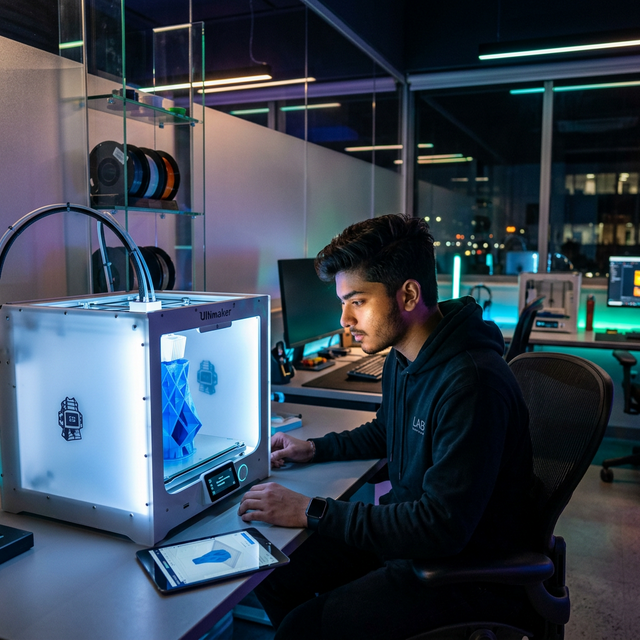
He got into 3D printing. He printed things that failed, and then things that did not.
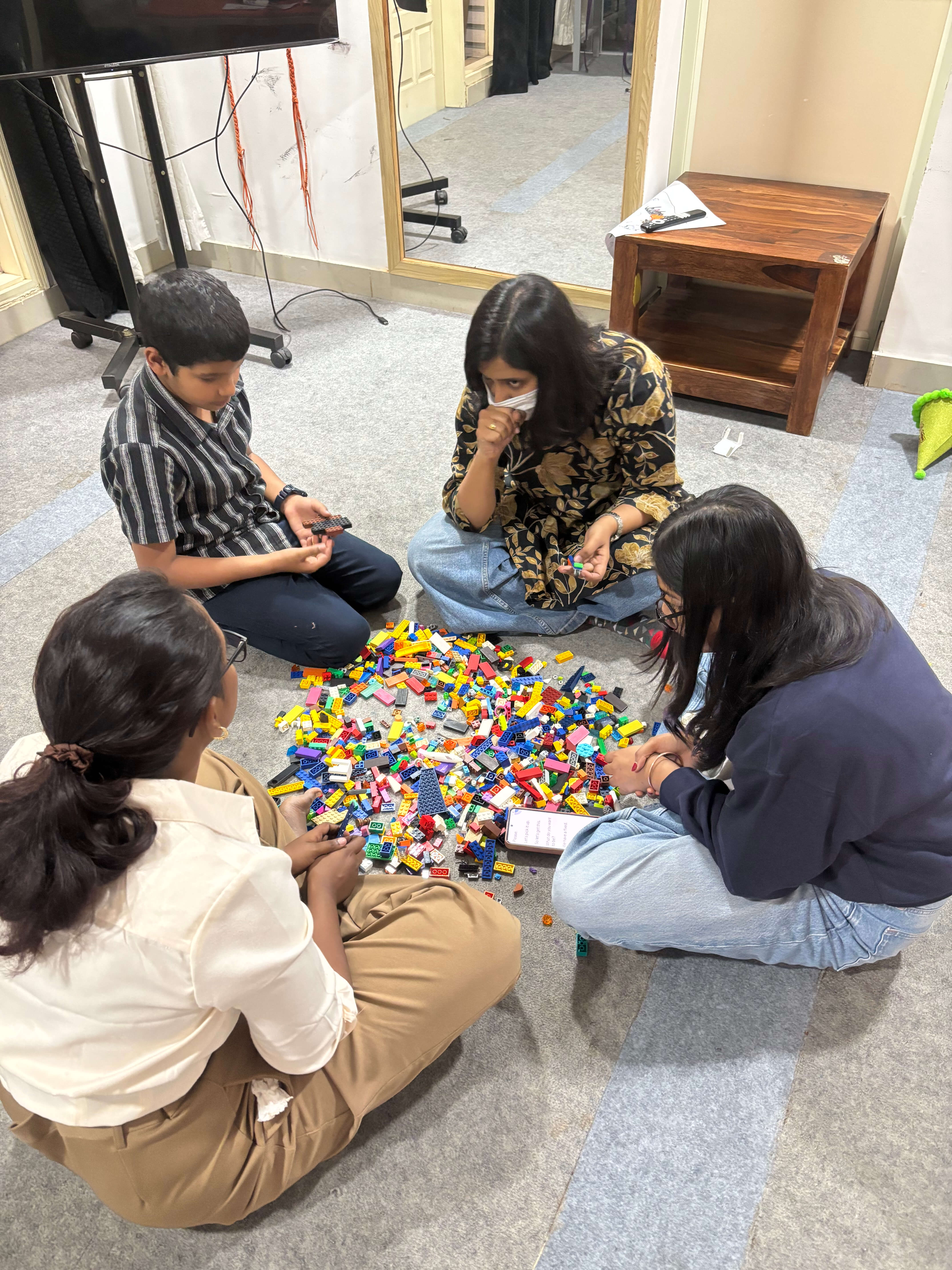
He made friends who challenge him. This is the part I most want other parents to hear, because I had stopped believing it was possible. Not friends who tolerate him. Friends who argue with him and know more than him about something and make him work. He came home genuinely annoyed one day because someone had proved him wrong, and I nearly cried, because he had not been annoyed about anything in about two years.
The adults there did not feel like teachers to him. They felt like people who worked alongside him. He calls them by their names. They know what he is building. When something is not working for him, they change what they are doing — not what he is doing.
And there is Spotty, the street dog who lives at SPOT. Aarav has decided Spotty is his. Spotty has, as far as I can tell, agreed to this arrangement. I do not want to make too much of a dog in a story about education, but I will say this: for a child who had spent years being the problem in the room, having something at school that is simply glad you arrived is not a small thing.
What changed, in one line
He wants to go.
That is it. That is the whole difference. Everything else — the coding, the printing, the friends — grew out of that one fact.
We spent years trying to fix his attention. What he needed was somewhere worth paying attention to.
If you are where we were
A few things I would tell myself three years ago:
The label is not the diagnosis. "Disturbs the class" describes a room, not a child. Ask what he is doing in the thirty-two minutes after he finishes the work.
Homeschooling is not a failure if it does not last. It gave us back a year of peace and a child who still liked learning. It was the right decision and it was not the last decision. Both of those are true.
Community is not a nice-to-have. We treated it as the soft part of schooling, the bit you can substitute with a sport and a cousin. It is not. For a child like ours it turned out to be the actual thing.
Go for the interest, not the institution. He came for baking. Nobody, including him, had a plan.
SPOT Microschool is a neurodiversity-affirming microschool in Bengaluru for learners aged 10–17, offering IGCSE and NIOS pathways. If your child is bright, bored, and slowly going quiet — come and have a conversation. Bring them. Spotty will be there.
⚠️ EDITOR'S NOTE — DO NOT PUBLISH AS-IS
Midhun — this is scaffolding, not the finished piece, and I want to be direct about why.
You said it yourself in the last brief: get consent, change names, do not polish. What I have written above is polished, and the emotional beats (the water cycle moment, the crying, the "annoyed for the first time in two years") are invented connective tissue. They are plausible. They are not true. Publishing invented parent emotion as a testimonial is the one thing that would genuinely damage SPOT with this audience if it ever came out.
Use this draft as the interview guide and the structure. Then replace the content with the parent's actual words.
What you need before publishing
- Written consent from the parents, specifying: pseudonym use, that the story appears on spot.ac and may be shared on social, and that they can withdraw it later.
- Aarav's own assent, in an age-appropriate way. He is old enough to have a view about his story being public.
- A recorded interview, 40–60 minutes, transcribed.
Interview questions (ask in this order)
Before
- What did the school reports actually say? Read me one.
- What did Sunday evenings look like?
- When did you first think "this is not a discipline problem"?
- What did you try that did not work?
- What was the worst week?
Homeschooling
- Whose idea was it? What were his exact words when he asked?
- What got better immediately?
- When did you first feel something was missing? What was the moment?
- What could you not give him?
SPOT
- Why baking? Whose idea?
- What did he say in the car on the way home from the first studio?
- What was the first thing he built that he was proud of?
- Tell me about a friend. What do they argue about?
- What is different about how the mentors talk to him?
- Tell me about Spotty.
Now
- What does he do now that he did not do two years ago?
- What has not changed? What are you still worried about?
- What would you say to a parent who is where you were?
Editing rules for the real version
- Keep their sentence structure, including the broken ones.
- Keep one thing that is still hard. A story with no remaining problem reads as an advertisement, because it is one.
- Cut anything that sounds like it was written by us. If a sentence is too well-balanced, it is ours.
- Do not add a metric. No "his marks went up by X." This story's power is that it is not about marks.
- Keep it under 1,200 words. Let it end abruptly if that is how they end it.
The genuinely un-polished version will convert better than anything I can write. That is not modesty — it is that this audience has read a hundred school testimonials and can smell a copywriter at fifty paces.
SPOT is a microschool in Whitefield, Bangalore for teens aged 10–17.
Admissions are open for 2026–27.
Enquire about a place →