Top 5 Personalised Learning Schools in the World (2026)
A comparison of five schools that actually personalise learning — Bridges Academy, FlexSchool, 21K School, School of One (Teach to One) and SPOT Microschool. Models, costs, who each one suits.
Top 5 Personalised Learning Schools in the World (2026)
Short answer: The five schools below each solved personalisation differently — Bridges Academy through talent development for 2e learners, FlexSchool through small ability-based classes, 21K School through scale and online flexibility, School of One (Teach to One) through algorithmic scheduling, and SPOT Microschool through a small neurodiversity-affirming cohort with individual learning plans. There is no single best. There is a best fit.
A note on honesty: SPOT Microschool is ours. We have included it because we think it belongs in this conversation for Indian families, and we would rather say that in the first paragraph than bury it.
What "personalised learning" actually means
The phrase is doing far too much work in education marketing right now. Broadly, there are three distinct things schools mean:
- Pace personalisation — the child moves through the same content at their own speed
- Path personalisation — the child takes a different route through the content
- Purpose personalisation — what the child is learning for is different, built around their strengths and interests
Most edtech does the first. Good alternative schools do the second. Very few institutions attempt the third, because it requires abandoning the idea that all children should end up in the same place.
Worth knowing before you read on: independent research on real-world personalised learning implementations remains genuinely contested. Personalisation is a design philosophy, not a guaranteed outcome. Ask any school on this list for its own evidence.
1. Bridges Academy — Studio City, California, USA
Model: Strength-based, talent-development day school for twice-exceptional learners.
Bridges Academy is a college prep school for Grades 4–12 serving twice-exceptional learners — students who are gifted but who also have learning differences including autism, ADHD, executive functioning challenges, processing deficits and mild dyslexia. The Bridges educational model is strength-based and talent-development driven, with each student given an individual learning plan built for their learning style and academic, creative and social-emotional needs.
Founded in 1994, it began as a private tutorial for three students in the founder's home. It now sits within the Bridges Education Group alongside a research and professional development centre, a media arm, and a second campus in Seattle.
Who it suits: Highly gifted 2e teenagers in the Los Angeles area whose families can access US private school tuition — reported at around $59,000 for the highest grade offered, with a student-teacher ratio of roughly 4:1.
Why it matters globally: Bridges is arguably the reference implementation for 2e education. Its research arm has shaped how the rest of the field talks about twice-exceptionality.
2. FlexSchool — New Jersey, New York, and online, USA
Model: Accredited private school network for gifted and 2e learners, with a live virtual campus.
FlexSchool is an accredited private school where gifted and twice-exceptional students learn in small, discussion-based classes with experiential learning, social-emotional learning and executive functioning support. It operates three campuses: Bronxville NY, Berkeley Heights NJ, and a fully live Virtual Cloud Campus. The Berkeley Heights campus serves grades 3–12 plus post-graduate, Bronxville grades 5–12 plus PG, and the Cloud Campus grades K–12 plus PG.
The school's origin story is small and specific — it was started to save one twelve-year-old girl who loved learning what she wanted to learn and was foundering in a conventional classroom.
Who it suits: Gifted and 2e learners who need intellectual peers more than they need a big campus. The Cloud Campus makes it one of the few genuinely accessible options for international families in this category.
Distinctive feature: Small ability-based discussion classes taught by subject experts — the emphasis is on being intellectually stretched, not just accommodated.
3. 21K School — Online, India
Model: India's first online-only K-12 school, built for scale and flexibility.
21K School is a recognised and accredited K-12 school offering Indian (NIOS) and British curricula (Pearson Edexcel and Cambridge Assessment International Education) online for learners aged 3 to 18, in India and abroad. Established in 2020 and headquartered in Bengaluru, it operates entirely online with no physical campus. Its community has grown to more than 20,000 students and 300 teachers across 500 cities and 78+ countries.
Live classes run roughly one to three hours a day, five to six days a week depending on grade — a structure that leaves substantial time for a child's own pursuits.
Who it suits: Families who need geographic flexibility, children whose lives do not fit a school timetable (athletes, performers, medically complex children), and homeschooling families who want board credentials without giving up autonomy.
The honest caveat: Personalisation at 21K is largely pace and pathway flexibility at scale. Class sizes range from 15 in pre-primary to 25–30 in primary and middle years. If your child needs a human who notices when they go quiet, scale works against you.
4. School of One / Teach to One — New York City, USA
Model: Algorithmic daily scheduling of maths instruction inside public schools.
Developed by the nonprofit New Classrooms, School of One placed up to 90 children in one large classroom with multiple teachers, with students progressing at their own pace through algorithm-generated "playlists" tailored to their individual needs. Founding CEO Joel Rose built it from a concern that in a traditional classroom, when a teacher is teaching, not every student is ready to learn.
Research findings have been mixed — two studies by different Columbia University researchers reached different conclusions, and the first covered 22 sites but had a weak comparison approach.
Who it suits: Nobody, directly — it is a programme schools adopt, not a school you enrol in. But it belongs on this list because it is the most serious attempt yet to answer the question what if the timetable itself was personalised?
Why include it: Every microschool that builds individual learning plans is, whether it knows it or not, doing by hand what School of One tried to do by algorithm. Understanding what it got right and where the evidence stayed murky is useful for any parent evaluating "AI-powered personalisation" claims.
5. SPOT Microschool — Bengaluru, India
Model: Small neurodiversity-affirming microschool for learners aged 10–17.
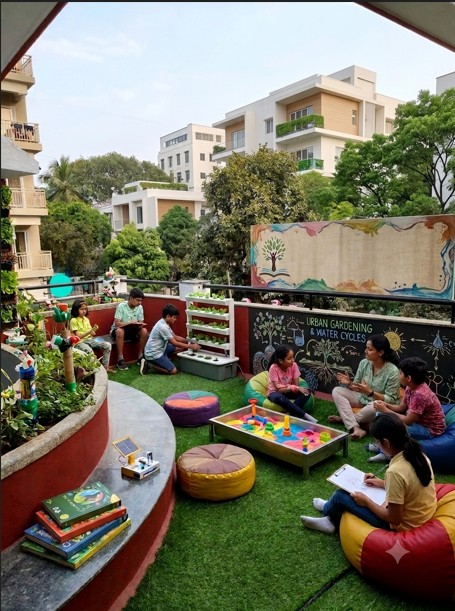
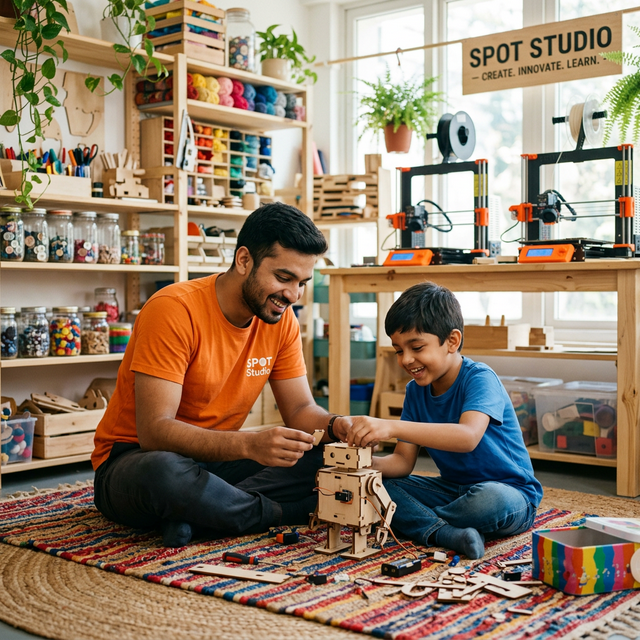
SPOT was built for the children who fall between the categories — neurodivergent, gifted, twice-exceptional, or simply so poorly served by conventional schooling that they had stopped trying. It runs as a single small cohort of around 20 learners, with IGCSE and NIOS pathways so the exit credential bends to the learner rather than the other way around.
What personalisation means here specifically:
- Individual learning plans with goals written in observable terms, reviewed on a fixed cycle
- Strategy tracking — when something is tried with a learner, we record whether it was helpful, partly helpful, rejected, or needs adaptation. That record travels with the child.
- Strengths-first documentation — what a child can do is written before what they cannot
- Executive function support built into the day, not bolted on as a therapy appointment
- Mixed-age cohort, because pairing by ability and interest works better than pairing by birth year
Who it suits: Families in Bengaluru with a 10–17 year old who is bright and struggling, who has been called "not living up to potential," or who has already left a mainstream school.
Who it does not suit: Families who want a large campus, competitive sport, or the social scaffolding of a big year group. We say this in the first meeting.
Side-by-side
| School | Location | Ages | Format | Core personalisation method | Credential |
|---|---|---|---|---|---|
| Bridges Academy | Studio City, USA | Grades 4–12 | Day school | Talent development + individual learning plans | US college prep |
| FlexSchool | NJ / NY / online, USA | K–12 + PG | Hybrid | Small ability-based discussion classes | US accredited diploma |
| 21K School | Online, India-based | 3–18 | Fully online | Flexible pace and curriculum choice at scale | NIOS, Cambridge, Edexcel |
| School of One | NYC, USA | Middle school | In-school programme | Algorithmic daily scheduling | N/A (maths programme) |
| SPOT Microschool | Bengaluru, India | 10–17 | Small in-person cohort | Individual learning plans + strategy response tracking | IGCSE, NIOS |
How to choose
Ask yourself three questions in this order:
- Does my child need to be seen, or does my child need to be stretched? Both matter, but schools optimise for one. Bridges and SPOT lean towards seen. FlexSchool and 21K lean towards stretched and flexible.
- Is the constraint geography or money? If geography, online is your category. If money, the Indian options are an order of magnitude apart from the US ones.
- What breaks first if this school does not work? For some children it is academics. For most of the children we meet, it is self-belief. Choose for the thing that breaks first.
Frequently asked questions
What is the best school for twice-exceptional students? For US families, Bridges Academy and FlexSchool are the two most established 2e-specific schools. For Indian families, options are far thinner — SPOT Microschool in Bengaluru is one of the few in-person settings designed around 2e profiles, with 21K School as an online alternative offering flexibility rather than 2e-specific expertise.
Is online school as good as in-person for a neurodivergent child? It depends on which need dominates. Online removes sensory load, commute stress and social exhaustion. It also removes incidental relationships and accountability. Children with high anxiety and low executive function often do better online for a year and then need in-person again.
Are microschools recognised in India? Microschools typically operate as learning centres and register learners for board exams through NIOS or as private candidates for Cambridge/Edexcel. The credential comes from the board, not the school — which is why the pathway question matters more than the label.
What does a personalised learning school cost in India? Fees vary widely. Online schools sit at the lower end; small in-person cohorts with high adult-to-child ratios cost considerably more because the ratio is the product. Ask any school what its adult-to-child ratio is and you will understand its fee structure immediately.
How is a microschool different from homeschooling? Homeschooling puts the parent in charge of design and delivery. A microschool keeps the small scale but moves design and delivery to trained educators, with peers. Many families move between the two.
SPOT Microschool is a strengths based small cohort microschool in Bengaluru for learners aged 10–17, offering IGCSE and NIOS pathways. Book a conversation.
SPOT is a microschool in Whitefield, Bangalore for teens aged 10–17.
Admissions are open for 2026–27.
Enquire about a place →