Designing a School Around Different Kinds of Learners
What changes when you design classrooms, schedules, and spaces for learners who do not all learn the same way — instead of asking them to fit one model.
Design is not merely a question of aesthetic appeal; for neurodivergent individuals, it is a critical component of cognitive grounding and emotional regulation. At SPOT, we believe that the environment is "the third teacher," and our studios are intentionally crafted to move beyond simple ADA compliance into true neuro-inclusive excellence.
The Sensory Landscape
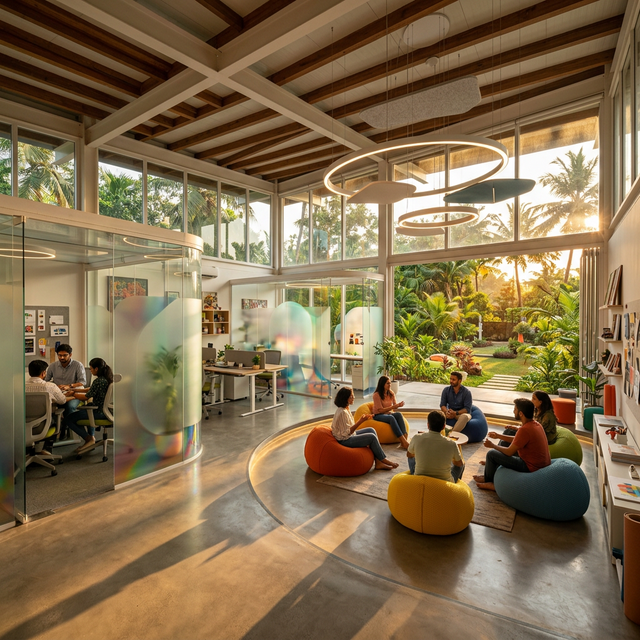
A typical classroom is a sensory minefield—flickering fluorescent lights, humming HVAC systems, and the visual clutter of instructional posters. For a divergent mind, these are not background noises; they are competing for attention. Our design philosophy prioritizes high-quality acoustics, indirect natural lighting, and "quiet zones" that allow students to retreat when overstimulated.
Spatial Agency and Movement
Why do we expect children to sit still for six hours? Movement is often how the neurodivergent brain processes information. Our studios feature diverse seating options from standing desks to floor cushions, and even movement-integrated stations. We create paths that allow for pacing, which for many is a vital part of the creative "fidgeting" that leads to breakthroughs.
Visual Clarity and Progressive Disclosure
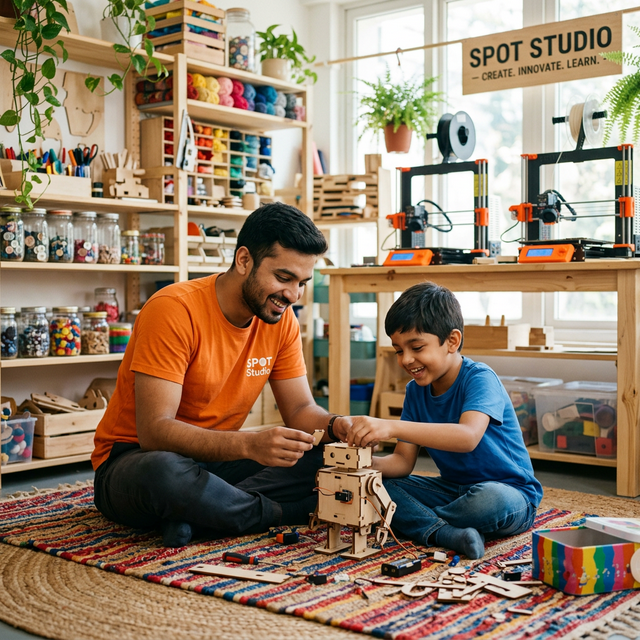
We use the principle of progressive disclosure in our physical space. Tools are organized in transparent but labeled containers. Work-in-progress is displayed in a way that documents the journey, not just the result. This reduces the cognitive load of "searching" and allows the student to focus on "doing."
By building for the edges, we create better environments for everyone. Neuro-inclusive design isn't just a feature; it's the foundation of how we forge the future.
SPOT is a microschool in Whitefield, Bangalore for teens aged 10–17.
Admissions are open for 2026–27.
Enquire about a place →